
Why Your Pet Hobby Can Help Save the Planet
Eco friendly pet crafts are one of the simplest ways to cut waste, save money, and make something your pet will actually love.
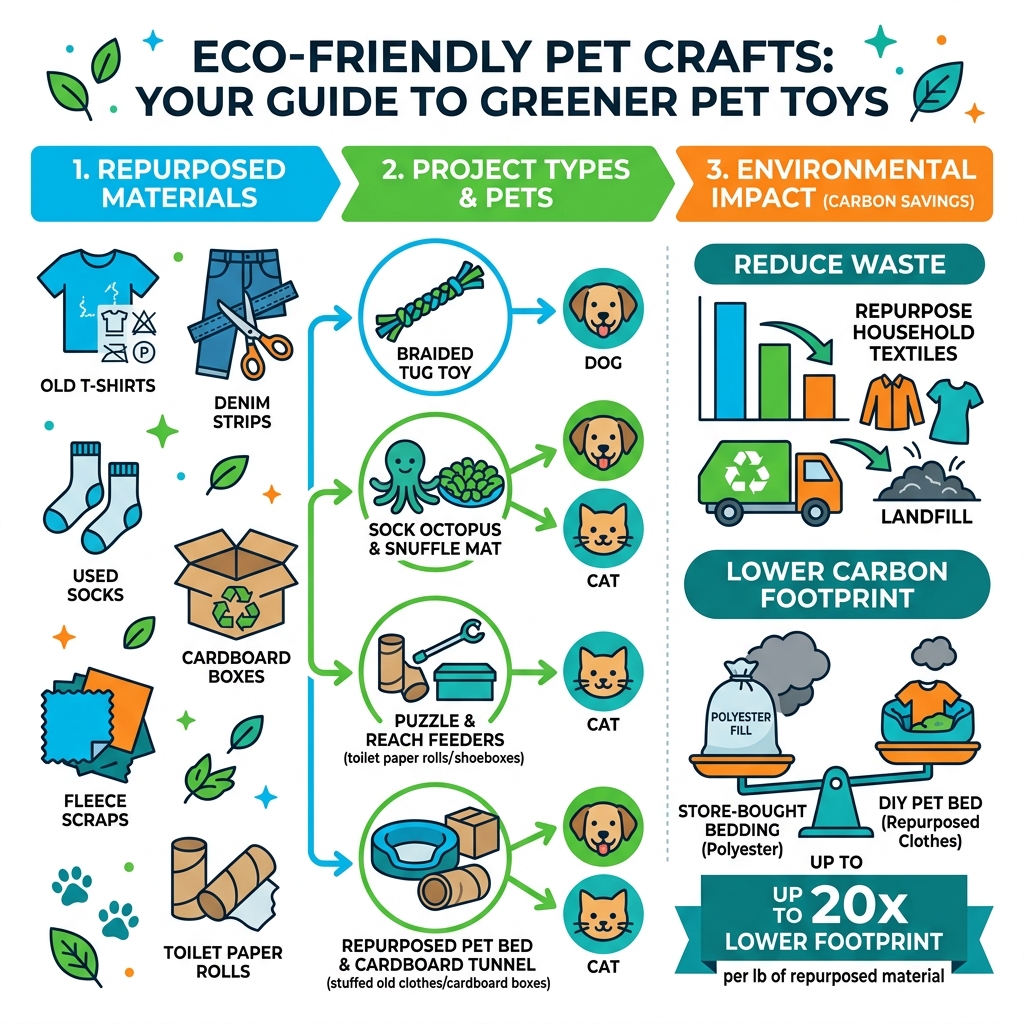
Here’s a quick look at what you can make and what you’ll need:
| Craft | Materials Needed | Best For |
|---|---|---|
| Braided tug toy | Old T-shirts or denim strips | Dogs |
| Sock octopus | Old socks | Dogs |
| Reach feeder | Toilet paper rolls + shoebox | Cats |
| Slow feeder | Toilet paper or paper towel roll | Cats |
| Snuffle mat | Fleece scraps + rubber mat base | Dogs and cats |
| Pet bed | Old clothes stuffed into a cover | Dogs and cats |
| Paw cleaning towel | Old hand towel + ribbon | Dogs |
| Cardboard tunnel | Cardboard boxes + non-toxic glue | Cats |
Most of us have a drawer full of socks with no matches, a pile of old jeans, or a stack of worn-out T-shirts we can’t bring ourselves to throw out — but also can’t think of what to do with. The answer might be sitting at your feet, wagging its tail.
The scale of the problem is real. 85% of textiles in the USA end up in landfills or burned. The average American throws away around 37kg of clothing every year, and about 60% of textiles can’t even be recycled. Meanwhile, the polyester stuffing inside most store-bought pet toys can take up to 200 years to decompose.
The good news? Every T-shirt you braid into a tug toy or sock you knot into an octopus is one less item heading to a landfill. And for every pound of old clothing you use to stuff a pet bed instead of buying new polyester fill, you reduce your carbon footprint by up to 20 times.
This guide walks you through practical, beginner-friendly projects — no fancy tools, no sewing machine required for most of them — that turn household waste into enriching, personalized toys and accessories your pet will love.
Why Choose Eco Friendly Pet Crafts?
Choosing to engage in eco friendly pet crafts isn’t just a fun weekend activity; it’s a powerful statement against the “throwaway” culture of the modern pet industry. When we walk into a big-box pet store, we are often met with aisles of plastic, chemically treated rubber, and polyester-stuffed plushies. While these might look cute for a day, their environmental price tag is steep.
By opting for DIY projects, we take control of the materials entering our homes. We can ensure that our pets aren’t chewing on toxic dyes or synthetic fibers that shed microplastics. More importantly, we are participating in a circular economy. Instead of extracting new resources to create a toy that will eventually end up in a landfill, we are extending the life of materials that already exist.
Reducing Your Carbon Footprint with Upcycled Materials
The statistics regarding textile waste are staggering. As mentioned, the average American discards about 37kg of clothes annually. Many of these items are made from synthetic blends that contribute to the 10% of global carbon emissions produced by the fashion industry.
When you decide to repurpose old clothes into an eco-friendly dog bed, you are directly combating this waste. For every pound of clothing you repurpose as stuffing, you reduce your carbon footprint by 20 times compared to buying new polyester fill. This is because you are bypassing the manufacturing, packaging, and shipping emissions associated with new products. You can find more inspiration on how to source these materials in our category/recycled-materials section. For more broad tips on green living with animals, look for resources that focus on sustainable pet parenting and waste reduction.
Mental and Physical Enrichment Through Sustainable Play
Beyond the environmental perks, eco friendly pet crafts offer incredible mental and physical benefits for our furry friends. Pets, especially those left alone during the day, need “jobs” to do. A simple cardboard box isn’t just trash; to a cat, it’s a fortress or a stalking ground. A knotted denim rope isn’t just a rag; to a dog, it’s a challenge to their jaw strength and a tool for bonding during tug-of-war.
Using creative-recycling-for-pet-toys allows us to create sensory-rich environments. Different textures—the roughness of denim, the softness of fleece, the crinkle of a paper bag—provide tactile stimulation that store-bought plastic toys often lack. This kind of “sensory safari” keeps their brains sharp and helps prevent destructive behaviors born from boredom.

Repurposing Household Waste into Pet Treasures
Your recycling bin is essentially a toy chest in disguise. Items we usually toss without a second thought, like toilet paper rolls, cardboard boxes, and plastic bottles, are the building blocks of high-level enrichment. We’ve explored many of these ideas in our guide on eco-friendly-pet-toys-from-household-waste and its sequel.
DIY Cat Enrichment: From Toilet Paper Rolls to Reach Feeders
Cats are natural hunters and foragers. In the wild, they don’t get a bowl of kibble handed to them; they have to work for it. You can replicate this “work” using simple toilet paper rolls.
- The Reach Feeder: Take an empty shoebox lid and trace the ends of 3-5 toilet paper rolls onto it. Cut out the holes and slide the rolls in so they stand vertically. Drop a few pieces of kibble or treats into each roll. Your cat will have to use their paws to “fish” the treats out, providing excellent fine motor skill practice.
- The Slow Feeder: Cut a few small holes (just larger than a piece of kibble) into the side of a paper towel roll. Place treats inside and fold the ends shut. As your cat bats the roll around the floor, treats will occasionally fall out, encouraging movement and preventing “scarf and barf” eating habits.
For more feline-focused ideas, see our tutorial on upcycling-socks-into-cat-toys.
Transforming Cardboard into Feline Tunnels and Houses
If you’ve ever bought an expensive cat tree only for your cat to sleep in the box it came in, you know that cardboard is king in the feline world.
Instead of throwing out shipping boxes, use non-toxic glue to stack them into a “cat condo.” You can cut portholes between the boxes to create a vertical maze. This utilizes the vertical space in your home, which is essential for a cat’s sense of security. Cardboard is also a great surface for scratching, and once it’s shredded to bits, it can finally be recycled or composted, making it a perfectly sustainable loop. Check out upcycled-sock-mice-for-cats for small additions to these cardboard mansions.
Durable DIY Dog Toys from Upcycled Textiles
For dog owners, the struggle is often durability. Many “eco-friendly” toys are made of soft materials that a determined chewer can dismantle in minutes. However, by using specific textiles like denim and certain knotting techniques, we can create toys that rival the toughest store-bought options.
No-Sew Braided Tug Toys and Sock Octopuses
T-shirts and socks are the most common textile wastes in most homes. They are also incredibly easy to work with because they don’t require sewing.
- T-Shirt Braids: Cut old T-shirts into long strips about 3 inches wide. Tie three strips together at one end and braid them tightly. Secure the other end with another knot. To make it more interesting, you can “tatter” the ends by cutting small slits into the tassels. This gives your dog something extra to gnaw on.
- The “Soctopus”: This is a fan favorite. Take a long calf-high sock and stuff the toe with 2-4 smaller, mismatched socks to create a “head.” Tie a firm knot below the head. Cut the remaining length of the sock into eight strips (the “legs”). Tie a few knots in each leg for texture. This toy is great for fetch because the weighted head allows for a good throw, while the legs provide a great grip for the dog.
Explore more variations in our guides on diy-rope-toys-from-old-clothes and part two.
Heavy-Duty Denim Crafts for Aggressive Chewers
If your dog is a “destroyer” who laughs at T-shirt toys, denim is your best friend. Old jeans are made of a rugged twill weave that is much harder to puncture.
Using recycled-denim-toys-for-dogs and recycled-denim-toys-for-dogs-2, we recommend the Crown Knot. This involves taking four long strips of denim and tying them in a specific interlocking square pattern. This creates a dense, heavy rope that can withstand serious tugging. For the ultimate “trash to treasure” project, you can even use the waistband of the jeans (with the button removed!) as a ready-made, ultra-tough chew ring.
Check out more recycled-denim-toys-for-dogs-3 for advanced techniques.
Sustainable Comfort: Beds, Mats, and Accessories
Crafting for your pet isn’t just about play; it’s also about rest and utility. Many commercial pet beds are treated with flame retardants or chemical pesticides that can be harmful over long-term exposure. Making your own accessories ensures a non-toxic environment.
Crafting Snuffle Mats and Paw Cleaning Towels
A snuffle mat is a fantastic “mental workout” tool. It consists of many strips of fabric tied to a base, creating a thick “grassy” texture where you can hide dry food.
- The Snuffle Mat: You can use fleece scraps from old blankets. Fleece is ideal because it doesn’t fray, meaning your pet won’t ingest loose threads. Simply tie 6-inch strips of fleece through the holes of a heavy-duty rubber sink mat or a piece of sturdy fabric with holes cut in it.
- The DIY Paw Towel: Tired of muddy prints on the carpet? You can turn an old hand towel into a specialized cleaning tool. By sewing it into a “pocket” or tube shape, you can slide your hand inside and easily wrap the towel around your dog’s paw for a 360-degree clean.
We have more fabric-based ideas in our homemade-toys-from-fabric-scraps and recycled-fabric-toys-for-pets tutorials.
Stuffing Your Own Eco-Friendly Pet Bed
One of the most rewarding eco friendly pet crafts is the “scent-filled” pet bed. Most dogs and cats find the scent of their owners incredibly comforting. By stuffing a bed cover with your old (unwashed!) T-shirts, sweaters, or towels, you provide a sense of security that a store-bought bed can’t match.
Avoid buying new polyester stuffing, which is essentially just plastic. Instead, use textiles that are too worn to donate. This creates a dense, supportive bed that is much more durable than cheap foam. For more on green products, see Eco-Friendly Pet Products: Toys, Food, and More and our own eco-friendly-dog-toy-tutorials-a-diy-guide.
Safety and Maintenance for Homemade Pet Gear
While DIY is wonderful, safety must come first. We want our pets to have fun, but we also want to avoid emergency vet visits.
Customizing Eco Friendly Pet Crafts for Every Breed
Not all toys are created equal. A toy that is safe for a Chihuahua might be a choking hazard for a Great Dane.
- Size Matters: Ensure the “head” of a sock toy or the knots on a rope are large enough that your dog cannot swallow them whole.
- Personalization: At Vanguarda Tec, we believe in the power of personalized play. If your dog is a “shredder,” avoid using thin fabrics like silk or thin cotton; stick to denim and heavy canvas. If your cat is a “swallower,” avoid using small items like bells or googly eyes that could be easily detached and ingested.
Always perform a “durability check” before and after play. If a toy is starting to fray or a knot is coming loose, take it away and repair it or recycle the pieces into a new project. You can find more safety tips in our guides on homemade-toys-from-scrap-materials and part two.
Educational Eco Friendly Pet Crafts for Kids
Crafting for pets is a fantastic way to teach children about “Green STEAM” (Science, Technology, Engineering, Arts, and Math) and animal welfare.
- The Lesson: Explain to kids why we are using an old shirt instead of buying a new toy. It teaches them about resourcefulness and the value of things.
- The Activity: Kids can help with simple tasks like sorting fabric colors, stuffing socks, or hiding treats in a snuffle mat. It builds a stronger bond between the child and the pet while instilling lifelong habits of sustainability.
Frequently Asked Questions about Eco Friendly Pet Crafts
How do I clean DIY toys made from recycled clothes?
Most fabric-based toys like T-shirt braids, denim ropes, and sock octopuses can be tossed right into the washing machine. We recommend using a cold water cycle and a mild, pet-safe detergent. To maintain the structural integrity of the knots, air drying is usually better than using a high-heat dryer. Always check for loose threads after washing!
What materials should I avoid when making pet crafts?
Avoid anything that could be toxic or a choking hazard. This includes:
- Buttons and Zippers: These are easily chewed off and swallowed.
- Rubber Bands: They can cause intestinal blockages if eaten.
- Toxic Dyes: If you aren’t sure if a fabric is “colorfast,” don’t use it for a chew toy.
- Small Embellishments: Skip the googly eyes or glued-on felt. Use embroidery or knots to create “features” instead.
Are homemade denim toys really durable enough for large dogs?
Yes! Denim is one of the strongest natural fabrics available. When knotted tightly using a “box knot” or “crown knot,” the resulting toy is incredibly dense. However, no toy is truly “indestructible.” Large dogs with powerful jaws should always be supervised during play to ensure they aren’t swallowing large chunks of fabric.
Conclusion
At Vanguarda Tec, we believe that the best way to care for our pets is to care for the world they live in. By embracing eco friendly pet crafts, you aren’t just saving a few dollars—though the cost savings are a great bonus!—you are actively reducing waste and providing your pet with a more stimulating, personalized, and safer life.
Whether you’re braiding a denim rope for a game of tug or stuffing a bed with your old sweaters to give your cat a sense of security, every project counts. Ready to start your next sustainable project? Check out our full range of customizable toy guides and join us in crafting a greener future for our furry friends.
