
Why Beginner DIY Pet Toys Are Worth Making (And How to Start)
Beginner diy pet toys are a simple, affordable way to keep your dog, cat, or small pet happy and mentally engaged — using materials you likely already have at home.
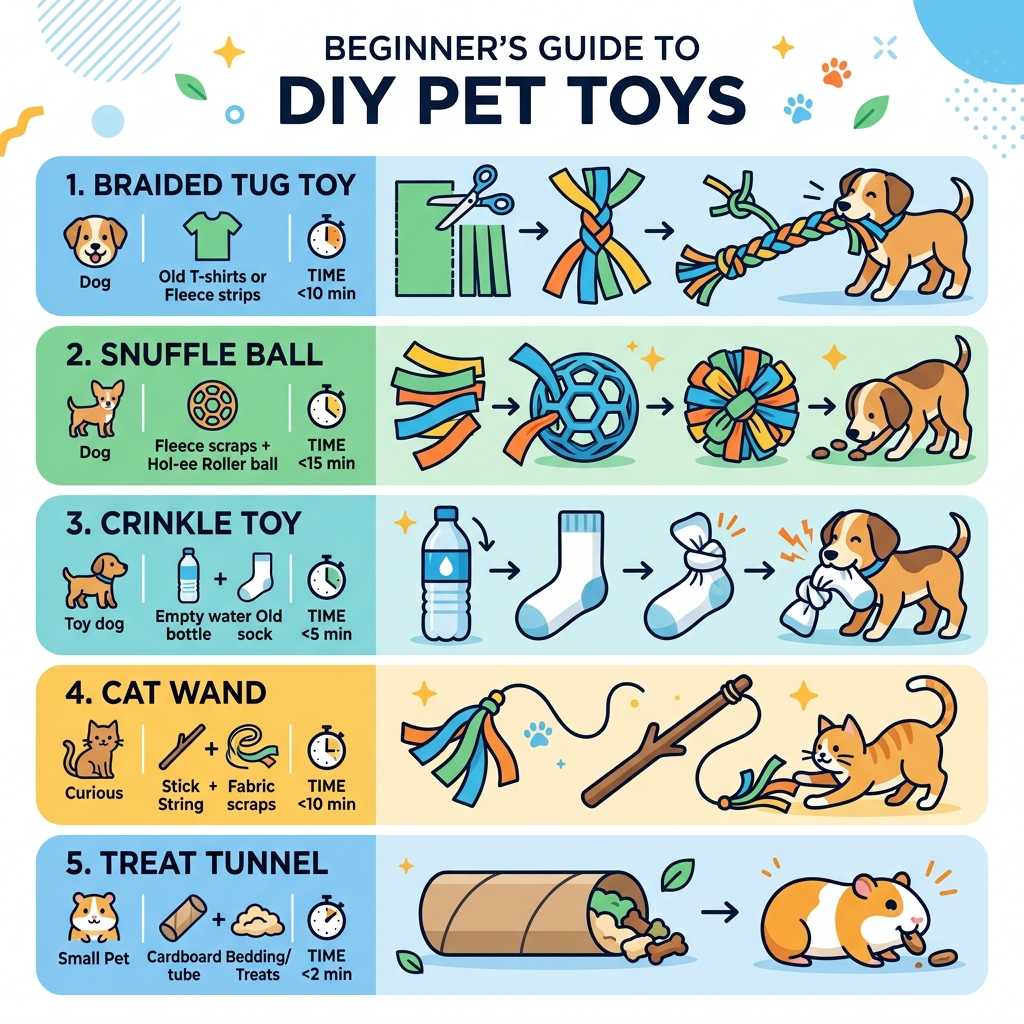
Here’s a quick overview of the easiest DIY pet toys to start with:
| Pet | Toy | Materials Needed |
|---|---|---|
| Dog | Braided tug toy | Old t-shirts or fleece strips |
| Dog | Snuffle ball | Fleece scraps + Hol-ee Roller |
| Dog | Crinkle toy | Empty water bottle + old sock |
| Cat | Cat wand | Stick + string + fabric scraps |
| Small pet | Treat tunnel | Cardboard tube + bedding/treats |
No sewing required for most of these. No special skills either.
Store-bought toys add up fast. And many pets destroy them in minutes anyway. Making toys at home costs next to nothing — and lets you customize them for your pet’s size, play style, and preferences.
There’s also a real enrichment benefit. Mental stimulation from puzzle-style toys can be 2-3 times more tiring for dogs than physical exercise alone. A simple homemade snuffle ball or treat puzzle can do more for your pet’s wellbeing than a long walk.
The best part? You don’t need to be crafty. The toys in this guide use everyday items — old denim, fleece pajamas, cardboard boxes, tennis balls — and take under 15 minutes to make.
The Benefits of Homemade Toys for You and Your Pet
When we talk about beginner diy pet toys, we aren’t just talking about saving a few dollars at the pet store—though that is a massive perk. Crafting your own toys offers a range of benefits that store-bought options simply can’t match.
Mental Enrichment and Physical Health
One of the most significant findings in pet behavioral studies is that rotating dog toys has been shown to improve movement and enrichment. When you make your own toys, you can create a vast “library” of items to swap out weekly. This keeps your pet’s environment “new” and exciting, preventing the boredom that often leads to destructive chewing on your favorite shoes or the sofa.
Furthermore, mental stimulation is a powerhouse for tiring out high-energy animals. Using scent-based toys, like a snuffle mat or a treat-filled ball, engages a dog’s most important sense. This type of “nose work” is incredibly taxing for their brains, often proving 2-3 times more exhausting than a standard walk.
Sustainability and Customization
We all have old t-shirts, worn-out jeans, and empty cardboard boxes destined for the bin. By repurposing these into pet toys, we reduce waste and give new life to household items. At Vanguarda Tec, we believe the best toys are the ones tailored to your pet. Does your dog prefer a specific texture? Use denim for durability or fleece for soft snuggling. Is your cat motivated by feathers or crinkle sounds? You can add exactly what they love.
Strengthening the Bond
The time you spend creating a toy specifically for your furry friend is a form of bonding. Watching them figure out a puzzle you built or play tug-of-war with a rope you braided is incredibly rewarding. It’s a personalized touch that says, “I know what you like.”
Safety First: Essential Tips for Beginner DIYers
Before we dive into the “how-to,” we must discuss safety. While beginner diy pet toys are fun to make, our pets play hard, and their safety is our top priority.
Material Selection
Not all household items are pet-safe. When choosing fabrics, we recommend fleece or knit fabrics (like t-shirts) because they do not fray. Frayed threads can be easily swallowed, leading to dangerous intestinal blockages. You should also be mindful of choosing-materials-for-puppy-toys specifically, as their sharp milk teeth can shred thinner materials more easily.
The “Nail Test” for Hardness
A great rule of thumb from industry experts is the nail test: you should be able to bend the material or mark it with your fingernail. If a material is too hard to be marked, it is likely hard enough to break a pet’s teeth during vigorous chewing.
Hazard Prevention
- Choking Hazards: Avoid small buttons, beads, or plastic eyes that can be chewed off and swallowed.
- Squeakers: If you are repurposing a squeaker from an old toy, always sew it into a separate, durable “pouch” (using a heavy fabric like duck cloth) before placing it inside the new toy. This provides an extra layer of protection if the outer toy is breached.
- Strings and Ribbons: While cats love them, strings can cause linear foreign body obstructions if swallowed. Always supervise play and never leave string toys out when you aren’t around.
Supervision and Maintenance
No toy is truly indestructible. We recommend supervising your pet whenever they are introduced to a new DIY toy. Regularly inspect the items for wear and tear. If a toy is falling apart or the stuffing is starting to peek through, it’s time to discard it and make a new one.

10 Simple No-Sew DIY Pet Toy Ideas
You don’t need a sewing machine to be a pet-toy pro. These beginner diy pet toys rely on knots, braids, and simple assembly.
1. The T-Shirt Braid (Dog/Cat)
Cut three long strips from an old t-shirt (about 2-3 inches wide). Tie them together at one end with a heavy knot, braid them tightly, and finish with another knot. For dogs, make it thick and heavy; for cats, make it smaller and perhaps tie a few feathers or a bell to the end.
2. The Water Bottle Crinkler (Dog)
Take an empty, clean plastic water bottle (remove the cap and the plastic ring). Slip it inside a sturdy old sock. Tie a knot in the end of the sock to secure the bottle inside. The “crunch” sound is irresistible to most dogs.
3. The Cardboard Destruction Box (Dog)
This is the ultimate low-effort toy. Take a cardboard box, throw in some crumpled paper, a few old socks, and hide dry kibble or treats throughout. Close the box and let your dog go to town “destroying” it to find the treasures. It’s a great way to channel their natural foraging instincts safely.
4. The Snuffle Ball (Dog)
Using a “Hol-ee Roller” (a rubber lattice ball), thread strips of fleece through the holes. You can roll treats inside the fleece strips before tucking them into the ball. This creates a “Pup Star” that keeps them sniffing for ages.
5. The Denim Knot (Dog)
Old jeans are incredibly durable. Cut a strip of denim from a pant leg, tie several tight knots in a row, and you have a heavy-duty chew toy that can withstand “power chewers.”
6. The Cat Fishing Pole (Cat)
Find a sturdy stick or a piece of PVC pipe. Tie a length of string to the end, and at the other end of the string, tie a bundle of fabric scraps or a “pom-pom” made of t-shirt yarn.
7. The Muffin Tin Puzzle (Dog)
Place treats in the holes of a muffin tin and cover each hole with a tennis ball. Your dog will have to figure out how to lift or move the balls to get the reward.
8. The Toilet Roll Treat Dispenser (Small Pets/Cats)
Fold the ends of a toilet paper tube inward to create a small box. Cut a few tiny holes in the sides and fill it with hay, herbs, or small treats. This is perfect for rabbits, hamsters, and even curious cats.
9. The Frozen Sock (Teething Puppies)
Soak an old (clean!) sock in water or low-sodium chicken broth, tie it in a knot, and freeze it. The cold helps soothe sore gums for teething puppies.
10. The Tennis Ball Treat Puzzle (Dog)
Carefully cut a small slit along the seam of a tennis ball. Squeeze the ball to open the slit and drop in some kibble. Your dog will have to roll and squeeze the ball to get the food out.
Customizing Toys for Your Pet’s Style
The beauty of beginner diy pet toys is the ability to adapt. Not every toy fits every pet.
Size Matters
A toy that is perfect for a Golden Retriever could be a literal wall for a Chihuahua. Conversely, a toy made for a small dog could be a choking hazard for a large breed. Always scale your fabric strips and knots to the size of your pet’s mouth.
Play Styles
- The Forager: If your pet loves to sniff, focus on snuffle mats and “destruction boxes.”
- The Tagger: If they love to pull, use denim or multiple t-shirt braids for extra strength.
- The Chaser: For “sighthounds” or high-drive cats, a flirt pole (a toy on a string attached to a stick) is the best way to burn energy.
- The Cuddler: If your pet likes to carry things around, check out our guide on simple-steps-to-make-plush-toys-for-pets for softer, comforting options.
Adding Scent and Treats
To increase engagement, you can rub a bit of catnip on cat toys or use high-value treats (like small pieces of dried liver) in dog puzzles. For dogs, using a “pupsicle” base—mixing one part Greek yogurt with three parts water and freezing it inside a toy—can provide a long-lasting, cooling treat.
Cleaning and Maintaining Your Homemade Toys
Since many beginner diy pet toys involve fabric and food, hygiene is important.
Washing Fabric Toys
Most fleece and t-shirt-based toys are machine washable. We recommend placing them in a mesh laundry bag and using a pet-safe, unscented detergent. Air drying is usually best to maintain the integrity of the knots.
Inspecting for Wear
Check your toys after every play session. Look for:
- Loose threads: Trim them immediately.
- Weakened knots: Re-tie them tighter.
- Plastic damage: If using water bottles or containers, check for sharp edges or cracks and replace the plastic insert as needed.
Rotating for Longevity
Don’t give your pet all their toys at once! Keep 3-4 out and hide the rest. When you swap them out every few days, the “old” toys feel brand new again, which keeps your pet from getting bored and being too rough on a single item.
FAQ: Common Questions for DIY Beginners
What materials should I absolutely avoid? Avoid anything with small detachable parts (beads, sequins), toxic glues, or fabrics that fray easily (like loosely woven burlap). Always ensure any wood used for cat wands or small pet toys is non-toxic (applewood is great; avoid cedar or pine). For more details, see our post on non-toxic-materials-for-pet-diy-toys.
How do I make a toy “harder” for a smart dog? If your dog solves a puzzle too quickly, increase the difficulty. For a snuffle ball, tuck the fabric strips tighter. For a treat dispenser, make the holes smaller. The more challenging the puzzle, the more rewarding it is for them!
Where can I find more patterns? There are thousands of ideas on Pinterest and YouTube. We also recommend checking out resources like Blue Cross for specific guides on small animal enrichment.
Can I use glue? If you must use glue, ensure it is labeled as non-toxic and “pet-safe.” However, for beginners, we usually recommend knots and sewing as they are generally safer. You can read more about pet-safe-glue-and-fabric-choices on our blog.
Ready to Start Crafting?
Making beginner diy pet toys is a journey of trial and error. Your first braided rope might look a little lopsided, or your cat might prefer the cardboard box over the fancy wand you made—and that’s okay! The goal is to provide a stimulating, safe, and loving environment for your pets.
By choosing to DIY, you are saving money, helping the planet, and providing your pet with enrichment that truly improves their quality of life.
Want more step-by-step tutorials? Explore our full library of DIY pet toy guides to find your next project! Whether you’re looking for beginner-friendly-pet-toy-diy tips or advanced sewing patterns, we have everything you need to keep those tails wagging and whiskers twitching.
