
Your Pet Deserves Better Toys — and You Can Make Them Right Now
How to make pet toys is simpler than most people think. Here’s a quick overview of the easiest methods:
Quick ways to make pet toys at home:
- Braid old T-shirt strips into a tug toy — no sewing needed, done in minutes
- Tie knots in a sock stuffed with a water bottle for a crinkly chew toy
- Cut fleece into strips and braid them for a soft, tooth-friendly tug
- Hide treats in a muffin tin covered with tennis balls for a puzzle game
- Roll fleece scraps into a fluffy ball for cats to bat around
Store-bought toys are expensive. And honestly? Your pet often ignores them after ten minutes.
One old T-shirt is enough to make one or two toys your dog will actually love. Fleece scraps, tennis balls, socks, toilet roll tubes — things you already own — can all become engaging, enriching toys.
The best part: homemade toys can be tailored to your pet’s personality. A cat with hunting instincts needs something different than a dog with a chase drive. When you make the toy yourself, you’re in control.
Whether you want to save money, reduce waste, or just make something special for your furry family member, this guide walks you through everything — from no-sew projects to basic sewing, and even how to sell what you make.

Why You Should Learn How to Make Pet Toys at Home
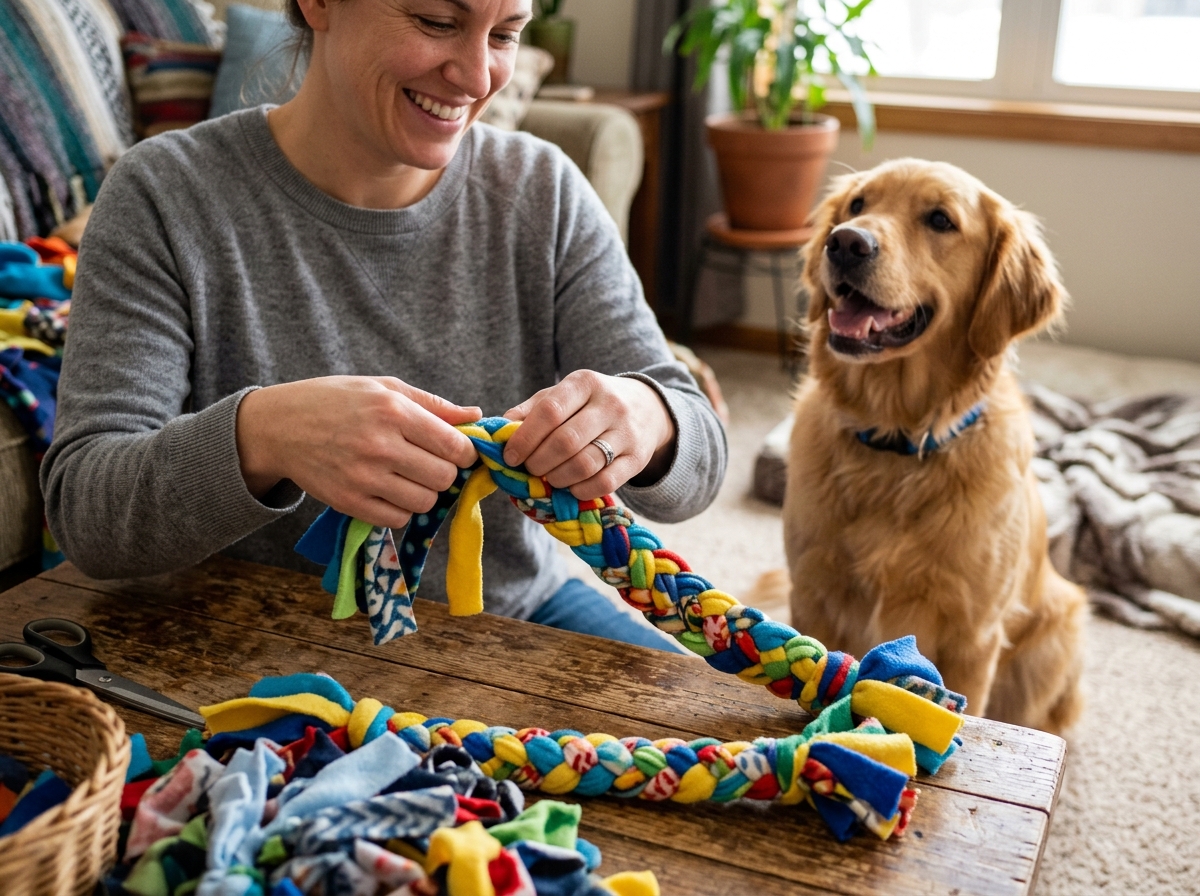
At Vanguarda Tec, we believe that the bond between a pet and their owner is strengthened through shared activity—and that includes the time you spend crafting for them. Learning how to make pet toys isn’t just a way to save a few dollars; it’s a comprehensive approach to better pet parenting.
First, let’s talk about the “toy graveyard.” We’ve all been there: you spend $20 on a plush dragon, and within thirty seconds, your “velociraptor” dog has performed a total fluff-ectomy. When you make toys yourself using upcycled materials, that destruction doesn’t hurt your wallet. In fact, research shows that DIY toys for your dog or cat | Animal Humane Society are just as effective at curbing excess energy as store-bought versions.
Beyond the financial aspect, DIY projects provide:
- Mental Stimulation: Boredom is the root of most destructive behaviors. Enrichment toys like snuffle mats or puzzle feeders engage a pet’s natural instincts—sniffing, hunting, and foraging.
- Sustainability: Instead of sending old T-shirts, towels, or plastic bottles to the landfill, you turn them into a source of joy.
- Safety Control: You know exactly what’s inside the toy. No mysterious chemicals or flimsy plastic bits that can be swallowed.
For a deeper dive into the philosophy of homemade enrichment, check out A Complete Guide to Homemade Pet Toys.
Essential Materials and Safety Considerations
Before we dive into the “how-to,” we need to raid your closets. Most of what you need is already within arm’s reach.
Common Household Materials for DIY Toys:
- Old Textiles: T-shirts (jersey knit is great because it doesn’t fray), denim from old jeans, tattered towels, and fleece remnants.
- Cardboard: Toilet paper rolls, cereal boxes, and shipping boxes.
- Rubber and Plastic: Clean tennis balls, empty water bottles (remove the cap and the plastic ring first!), and PVC pipes for more advanced builds.
- Fillers: Polyester fiberfill, old fabric scraps, or even crinkle paper.
Safety First: The Golden Rules We want our pets to have fun, not a trip to the emergency vet. When learning how to make pet toys, keep these safety tips in mind:
- Supervision is Key: No toy is truly indestructible. Always watch your pet during the first few play sessions.
- Avoid Choking Hazards: Skip the googly eyes, beads, or small buttons. If you’re making cat toys, be extra careful with long strings. Learn more about Avoiding Choking Hazards in DIY Cat Toys.
- Non-Toxic Only: Use Non-Toxic Materials for Pet DIY Toys and ensure any adhesives used are pet-safe. If you’re unsure, check out our guide on Pet Safe Glue and Fabric Choices.
- Inspect Regularly: If a toy starts to fray or the stuffing begins to peek out, it’s time to retire it.
Step-by-Step: No-Sew Dog Toys for Every Breed
You don’t need to be a master tailor to create something amazing. In fact, some of the most durable tug and chew toys require zero stitching.
The Classic Braided T-Shirt Tug
This is the ultimate entry-level project. One T-shirt can yield up to two toys!
- Prep the Fabric: Cut off the hems and seams of an old T-shirt. Cut the remaining fabric into strips about 3 inches wide and 12 inches long.
- The “Sausage” Roll: Roll each strip tightly into a “sausage” shape to prevent fraying and increase durability.
- The Knot: Take three strips and tie them together at one end with a tight overhand knot.
- Braid Away: Braid the three strips tightly. The tighter the braid, the harder it is for your dog to pick it apart.
- Finish: Secure the other end with another overhand knot. Trim any excess.
For more variations, including the “square knot” technique that makes a much thicker, sturdier rope, see our guide on DIY Rope Toys from Old Clothes.
The Crinkle Sock
Does your dog love the sound of a crunching water bottle?
- Take a clean, empty plastic water bottle (remove the cap and the little plastic ring!).
- Stuff it into an old long sock.
- Tie a knot at the open end of the sock.
- For extra fun, you can use two socks for added durability. This is a great way to repurpose those “lost” socks that have lost their partners in the laundry.
You can find more ideas like this in 18 DIY dog toys you can make from items in your house – Care.com.
Mental Stimulation: How to Make Pet Toys for Enrichment
Physical exercise is great, but mental exercise is what truly tires a dog out. Using their nose and brain for 15 minutes can be as exhausting as an hour-long walk.
The Destruction Box This is exactly what it sounds like—a safe outlet for dogs who love to shred.
- Take an empty cereal box or cardboard shipping box.
- Toss in a few handfuls of kibble or some smelly treats.
- Stuff the box with crumpled-up packing paper or old T-shirt scraps.
- Tape it shut (using minimal, pet-safe tape) and let your dog go to town.
- Note: This is intended for destruction, so be ready to clean up some cardboard confetti!
The Muffin Tin Puzzle This is a fantastic “brain game” that requires zero assembly.
- Place small treats in the holes of a standard muffin tin.
- Cover each hole with a tennis ball.
- Your dog has to figure out how to remove the balls to get to the rewards.
The Snuffle Mat A snuffle mat leverages a dog’s incredible sense of smell. To make a simple one:
- Get a rubber sink mat (the kind with holes).
- Cut dozens of strips of fleece (about 1 inch wide and 6 inches long).
- Tie each strip through the holes of the mat until the entire surface is a “forest” of fleece.
- Hide dry kibble deep in the fabric.
For more enrichment ideas, check out Crafting Homemade Chew Toys for Dogs and learn How to Test Homemade Dog Toys for durability.
Interactive Puzzles: How to Make Pet Toys for Cats
Cats are natural-born hunters. Their toys should mimic the movement of prey—birds, mice, or insects. Learning how to make pet toys for cats often involves creating things they can bat, chase, and “capture.”
The DIY Cat Wand
Instead of buying a plastic wand that snaps in two days, make a sturdy one yourself.
- The Stick: Use a wooden dowel or even a sturdy stick from the backyard (sanded smooth).
- The String: Attach a piece of sturdy twine or elastic cord to the end.
- The “Prey”: Tie on a few strips of colorful fleece, some feathers, or a small felt ball.
- Movement: Flick the wand across the floor or through the air to engage your cat’s hunting instincts.
The Toilet Roll Feeder Ball
Don’t throw away those cardboard tubes!
- Fold the ends of a toilet paper roll inward to create a sealed “pod.”
- Cut a few small holes (just slightly larger than a piece of kibble) into the sides of the tube.
- Place a few treats inside.
- As your cat bats the tube around the room, treats will occasionally fall out, providing a rewarding challenge.
Fleece “Pom-Poms”
These are incredibly easy and use up those tiny fleece scraps you have left over from dog toys.
- Stack four 3-inch squares of fleece.
- Make parallel cuts halfway into the stack on two opposite sides to create a fringe.
- Tie a long, thin strip of fleece tightly around the middle of the stack.
- Fluff out the fringes to create a soft, bouncy ball.
For more feline fun, explore Making Cat Toys from Household Items and DIY Hide and Seek Toys for Cats. You can also watch visual tutorials like DIY Dog Toys Made From Common Household Items – YouTube for inspiration that works for both species.
Advanced Projects: Sewing Your Own Plush Toys
If you have a sewing machine or are handy with a needle and thread, you can create professional-quality plush toys. At Vanguarda Tec, we love making personalized stuffed animals that match our pets’ sizes and chewing habits.
The Squeaky Fabric Bone
- Template: Draw a bone shape on a piece of paper and cut it out. Trace this onto two pieces of durable fabric (like denim, duck cloth, or thick wool felt).
- The Squeaker Pouch: This is a pro-tip for safety! Instead of just tossing a squeaker into the stuffing, sew a small pouch out of “duck cloth” (a very heavy canvas). Place the squeaker inside and sew it shut. This prevents the squeaker from becoming a choking hazard if your dog manages to rip the outer toy.
- Assembly: Pin the two bone shapes with “right sides” facing each other. Sew around the edges, leaving a 4-inch opening.
- Turning and Stuffing: Turn the fabric right side out through the opening. Stuff firmly with polyester fiberfill, making sure to tuck your squeaker pouch right in the middle.
- Closing: Hand-stitch the opening closed using a reinforced stitch.
Choosing the Right Fabric
- Wool Felt: We recommend wool felt (2-4 mm thick). It’s durable, doesn’t fray, and absorbs your scent, which makes the toy more comforting for your pet.
- Denim: Great for heavy chewers.
- Fleece: Best for “cuddle” toys or “shakers” who like to whip their toys back and forth.
For more detailed sewing guides, see Simple Steps to Make Plush Toys for Pets and follow our Safe Sewing Tips for Pet Toys to ensure your seams are “dog-proof.” You can also check out Ensuring Durability in Homemade Toys.
Frequently Asked Questions about DIY Pet Toys
What are the best household items to repurpose for pet toys?
The most versatile items are old T-shirts (specifically jersey knit), fleece blankets, and socks. For enrichment, cardboard (cereal boxes, toilet paper rolls) and plastic bottles are king. If you’re feeling crafty, denim from old jeans is one of the most durable materials you can find for free.
How do I clean and maintain my homemade pet toys?
Most fabric-based DIY toys (fleece, T-shirt braids, denim) can be tossed in the washing machine on a cold, gentle cycle. We recommend placing them in a mesh laundry bag to prevent knots from unraveling. Always air dry your DIY toys; high heat in the dryer can shrink wool felt or melt any plastic components. For felt toys, hand washing in cool water with mild soap is best.
Can I sell my handmade pet toys online?
Absolutely! Many successful small businesses started with a single handmade dog toy. If you’re looking to turn this hobby into income:
- Focus on Quality: Use high-grade materials like organic cotton or wool felt.
- Safety Testing: Ensure your seams are incredibly strong.
- Platforms: Start on Etsy or Instagram. Use high-quality photos and relevant hashtags.
- Branding: Personalized and customizable options (like a toy with a pet’s name) are huge sellers.
Conclusion
Learning how to make pet toys is a rewarding journey that benefits your wallet, the planet, and most importantly, your pet. Whether it’s a simple 2-minute T-shirt braid or a meticulously sewn plush bone, the effort you put in translates to hours of joy for your furry friend.
At Vanguarda Tec, we’re passionate about helping you create high-quality, customizable, and safe products for your pets. DIY isn’t just about saving money—it’s about the satisfaction of seeing your pet choose the toy you made over anything from a store.
Ready to start your next project? Explore our full library of guides and Start your DIY journey with Vanguarda Tec. Happy crafting!
