
Why Every Kitten Deserves a Toy You Made Yourself
Easy homemade kitten toys are one of the best ways to keep your young cat happy, active, and mentally sharp — without spending a lot of money.
Here are the simplest DIY kitten toys you can make right now:
- Sock fish — stuff a clean sock with crinkly paper, tie it shut
- Toilet paper roll puzzle — fold the ends closed and hide treats inside
- Fleece pom-pom — cut fleece into strips, tie tightly in the center, fluff out
- Paper ball — crumple a single sheet of paper into a ball
- Yarn ball — wrap yarn around a small foam ball, tuck the end in
All of these use items you likely already have at home. No sewing, no special tools, no craft store trip needed.
Store-bought toys can be expensive — and honestly? Kittens don’t care about the price tag. As one pet owner put it, cats are masters at finding joy in the simplest things — an empty box, a crumpled piece of paper, a loose piece of yarn.
Beyond saving money, making toys yourself lets you control the materials, customize the size for a small kitten, and create something your cat actually enjoys.
In this guide, you’ll find step-by-step instructions for five easy toys, plus safety tips and advice on using catnip.
Why Enrichment Matters for Growing Kittens
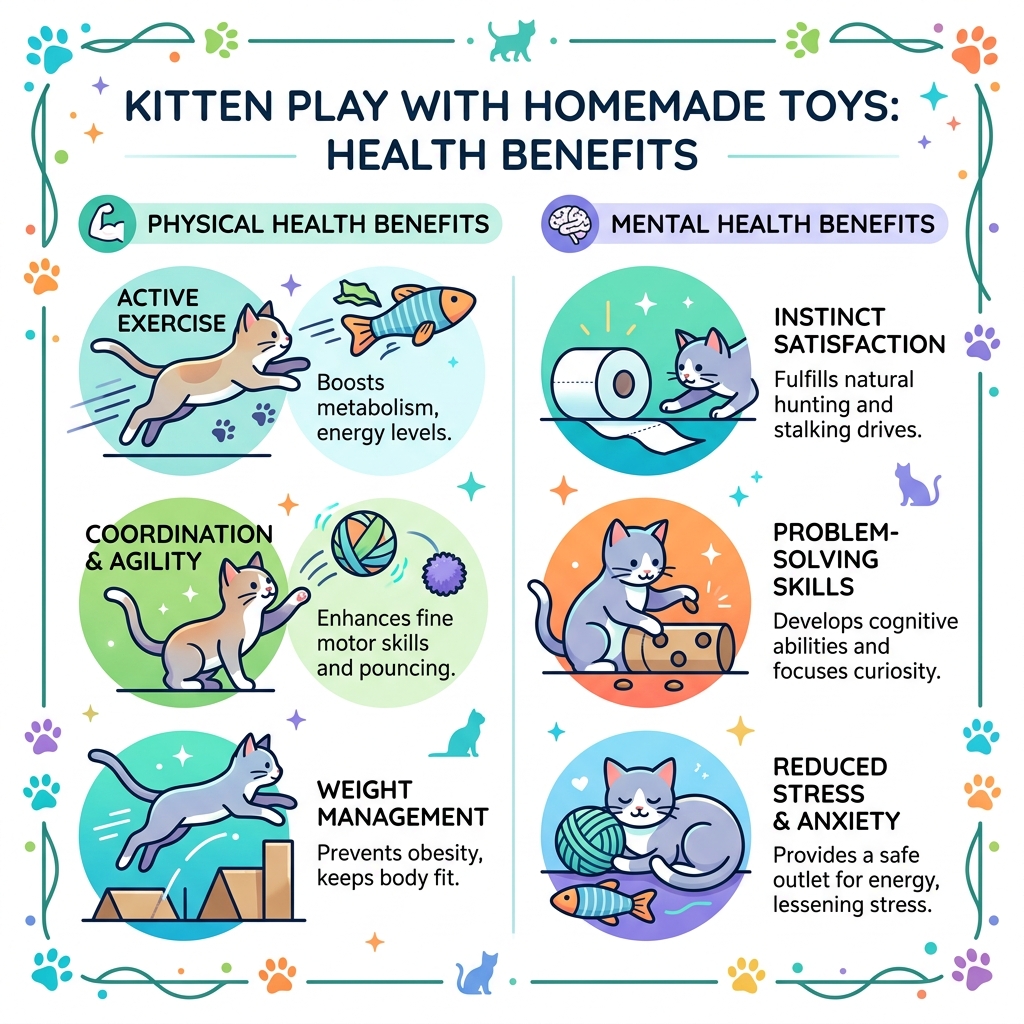
When we bring a new kitten into our lives, we often focus on the basics: food, water, and a litter box. However, mental health and physical exercise are just as vital for a developing feline. Kittens are natural-born hunters. In the wild, their days would be filled with stalking, pouncing, and batting at prey. In a home environment, without proper outlets, that energy often turns into “zoomies” at 3 AM or, worse, destructive behavior like shredded curtains and scratched furniture.
Providing indoor-cat-enrichment-ideas is about more than just “playing.” It’s about satisfying their predatory instincts. When a kitten bats at a feather or hunts for a treat in a cardboard tube, they are engaging their brain and body in a way that reduces stress. In fact, environmental enrichment can even help prevent health issues like Pandora syndrome, which is often linked to feline stress.
By taking interactive-cat-toys-a-diy-approach, we aren’t just saving a few dollars; we are building a bond. Watching your kitten master a puzzle you built from scratch is incredibly rewarding. It keeps them lean, prevents boredom, and ensures they grow into well-adjusted adult cats.
Essential Materials for Easy Homemade Kitten Toys
You don’t need a workshop or a sewing machine to create a kitten wonderland. Most of the easy homemade kitten toys we recommend start in your recycling bin or your laundry room. Before you throw away that empty toilet paper roll or that mismatched sock, consider it a potential gold mine for your pet.
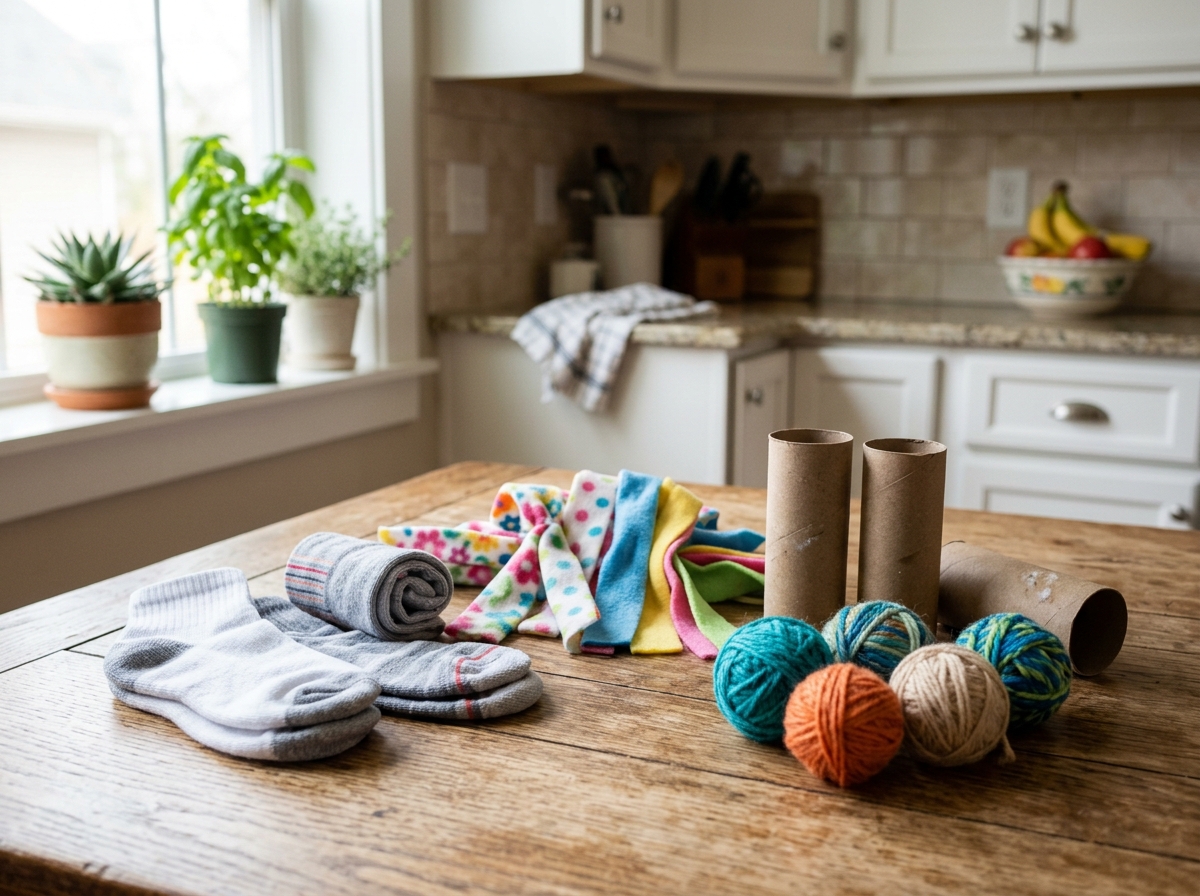
Here is a quick checklist of basic materials we frequently use:
- Cardboard tubes: Toilet paper and paper towel rolls are the MVPs of DIY toys.
- Old socks: Clean, lone socks are perfect for “kick” toys.
- Fleece scraps: Soft, durable, and doesn’t fray when cut.
- Sisal rope: The ultimate texture for scratching.
- Non-toxic glue: A hot glue gun is helpful, but ensure the glue is safe and hidden from curious teeth.
- Crinkle materials: Clean packing paper or plastic grocery bags (used only as internal stuffing) provide that “crunch” kittens love.
Repurposing Household Items for Easy Homemade Kitten Toys
The beauty of DIY is the “trash-to-treasure” aspect. If you are making-cat-toys-from-household-items, you are reducing waste while entertaining your pet. For example, wine corks make excellent “prey” because they bounce unpredictably. You can even learn how-to-make-cat-toys-out-of-household-items-and-yarn by wrapping that cork in colorful string to make it easier for your kitten to hook with their claws.
Cardboard boxes are another staple. A simple box with a few holes cut into the sides becomes a “whack-a-mole” game or a secret castle. We love seeing how a simple piece of household “junk” can provide hours of entertainment.
Step-by-Step Guide to 5 Easy Homemade Kitten Toys
Ready to get started? We’ve selected these five projects because they are beginner-friendly, require no sewing, and have been tested by the most energetic kittens. If you’re interested in creating-fun-ball-toys-for-cats, these guides will show you how to do it with flair.
1. The Upcycled Sock Fish
This is perhaps the easiest toy on the list. It’s designed to encourage “bunny kicking,” a natural behavior where a cat holds a toy with its front paws and kicks rapidly with its back legs.
Materials needed:
- One clean, long sock (a baby sock works for tiny kittens!)
- Crinkle paper (packing paper or newspaper)
- Optional: Dried catnip
Instructions:
- Take your clean sock and stuff it about two-thirds full with crumpled paper. You want it to be firm but still have some “squish.”
- If you’re using catnip, sprinkle a tablespoon into the center of the stuffing.
- Tie a very tight knot at the open end of the sock. Pull it hard to ensure it won’t come undone during a wrestling match.
- Give it to your kitten and watch them go “bonkers” for the crinkling sound!
For more variations, check out our guides on upcycled-sock-mice-for-cats and upcycling-socks-into-cat-toys.
2. Toilet Paper Roll Treat Puzzle
Puzzle toys are essential for mental stimulation. They force the kitten to think and move to get a reward.
Materials needed:
- 1-3 empty toilet paper rolls
- A few of your kitten’s favorite dry treats or kibble
Instructions:
- Take one cardboard tube and fold the edges of one end inward to close the hole.
- Drop 3-4 treats inside the tube.
- Fold the edges of the other end inward, but leave a tiny gap or cut a small “V” shape in the side of the roll.
- Place it on the floor. Your kitten will have to bat the roll around until the treats fall out of the small opening.
This is a great introduction to using-cardboard-to-make-cat-playthings and diy-hide-and-seek-toys-for-cats.
3. No-Sew Fleece Pom-Poms
These are soft, lightweight, and perfect for kittens to carry around in their mouths like “prizes.”
Materials needed:
- Fleece fabric scraps (old blankets or t-shirts work too)
- Scissors
Instructions:
- Cut the fleece into about 8-10 strips, each roughly 4 inches long and 1 inch wide.
- Stack the strips on top of each other.
- Take one extra-long strip of fleece and tie it tightly around the middle of the stack.
- Knot it twice as hard as you can.
- Fluff out the ends of the strips to create a ball shape.
These homemade-toys-from-fabric-scraps-2 are safe because fleece doesn’t unravel into dangerous long strings.
4. Cardboard Scratching Pad
Kittens need to scratch to shed their outer claw sheaths and mark their territory. A DIY scratcher can save your sofa!
Materials needed:
- Corrugated cardboard boxes
- Non-toxic glue or duct tape
- Sisal rope (optional)
Instructions:
- Cut your cardboard into long strips of equal width (about 3 inches wide).
- Start rolling one strip tightly into a circle.
- Glue or tape the end of the first strip to the beginning of the second strip and keep rolling.
- Continue until you have a large, flat disc of cardboard.
- Secure the outer edge with tape or glue.
This project is a classic example of using-cardboard-to-make-cat-playthings-2 and fits perfectly into cat-climbing-and-playing-ideas.
5. Feather Wand Teaser
Interactive play is the best way to bond. A wand toy allows you to mimic the flight of a bird or the scuttle of a bug.
Materials needed:
- A wooden dowel or a sturdy stick
- Lycra cord or thick elastic string
- Feathers or fabric scraps
- Jingle bell (optional)
Instructions:
- Tie the lycra cord securely to one end of the dowel. We recommend tying it multiple times and pulling it tight to stretch it.
- On the other end of the cord, tie your feathers or fabric strips.
- If you have a bell, thread it onto the cord before tying the final knot.
- Wave the wand near your kitten (but never directly at their face) to trigger their hunting drive.
For more details on assembly, see our feather-toys-for-cats-easy-diy-steps guide.
Safety First: Materials and Precautions
While making easy homemade kitten toys is fun, safety is our top priority. Kittens are like toddlers; they explore the world with their mouths. A toy that is safe for a 5-year-old cat might be a hazard for a 12-week-old kitten.
The biggest risks are ingestion and entanglement. When you are avoiding-choking-hazards-in-diy-cat-toys, you must be vigilant about small parts. We always recommend omitting “cute” additions like plastic googly eyes or small beads. A kitten can easily rip these off and swallow them.
Safety Tips for Using Easy Homemade Kitten Toys
- Supervision is key: Never leave a kitten alone with a wand toy or anything with a long string. They can quickly become entangled.
- Check for wear and tear: Cardboard will get shredded and socks will get holes. Inspect toys daily and toss them if they start falling apart.
- Smooth the edges: If you cut plastic containers for puzzles, use duct tape or a lighter to smooth any sharp edges.
- Avoid “stringy” things: Rubber bands, dental floss, and thin thread are extremely dangerous if swallowed as they can cause intestinal blockages.
| Material | Safety Status | Why? |
|---|---|---|
| Fleece | Safe | Doesn’t fray; soft on teeth. |
| Cardboard | Safe | Non-toxic; satisfies shredding urges. |
| Sisal Rope | Safe | Very durable; great for claws. |
| Googly Eyes | Unsafe | Major choking hazard; easily bitten off. |
| Rubber Bands | Unsafe | Can cause fatal intestinal blockages. |
| Thin Yarn | Caution | Only use if securely wrapped or supervised. |
For more in-depth safety advice, read about avoiding-choking-hazards-in-diy-cat-toys-3.
Maximizing the Fun: Catnip and Maintenance
To keep your kitten’s interest high, you need to keep the toys “fresh.” This applies to both their physical cleanliness and their “scent” appeal.
Incorporating Catnip into Easy Homemade Kitten Toys
Catnip is a member of the mint family that contains a compound called nepetalactone. When cats sniff it, it often triggers a euphoric reaction. You can learn more about catnip and how it affects many cats. However, here are two important facts to keep in mind:
- Genetic Sensitivity: About 50-75% of cats have a genetic sensitivity to catnip. If your kitten doesn’t react, they might just be in the 25-50% that doesn’t have the “catnip gene.”
- Age Matters: Many kittens don’t develop a reaction to catnip until they are 6 to 12 months old. If your tiny kitten is indifferent, try again when they are older!
If your cat does love it, the effects usually last for about 10 to 15 minutes. After that, the cat becomes temporarily immune to its effects for an hour or two. You can “refresh” old DIY toys by sealing them in a jar with organic catnip overnight.
Frequently Asked Questions about DIY Kitten Toys
How often should I clean or replace homemade toys?
We recommend a “toss and replace” policy for cardboard and paper toys once they become soiled or heavily shredded. Fabric toys like sock fish or fleece pom-poms can be hand-washed with a mild, pet-safe detergent and air-dried. If a toy is falling apart, replace it immediately to avoid your kitten swallowing small pieces.
What are the best colors for kitten puzzle toys?
While humans love a rainbow of colors, cats see the world differently. Research suggests cats see shades of blue, yellow, and green best. If you are coloring a puzzle toy to make it more engaging, stick to bright yellows and greens to help them spot the “prey” inside.
Are there specific materials I should never use?
Avoid anything that can splinter (like cheap plastic or thin wood), anything with toxic dyes, and anything small enough to fit entirely inside a kitten’s mouth. Also, steer clear of “loop” piles in fabrics where a kitten’s claw could get stuck, causing panic or injury.
Conclusion
At Vanguarda Tec, we believe that the best toys aren’t found in a store aisle — they are crafted with love at your kitchen table. Making easy homemade kitten toys is a rewarding way to provide a customizable, personalized experience for your pet while saving money.
Whether you are rolling a cardboard scratcher or stuffing a sock fish, you are providing the essential enrichment your kitten needs to thrive. The joy on your kitten’s face when they pounce on a toy you made is the ultimate reward.
Ready to start your next project? More info about our DIY guides can be found on our main page, where we help you turn everyday items into pet-approved treasures. Happy crafting!
