
Why Cheap Pet Toy Crafts Save You Money Without Sacrificing Fun
Cheap pet toy crafts let you turn everyday household items into engaging toys for your dog or cat — often for zero cost.
Here are the easiest DIY pet toys you can make right now:
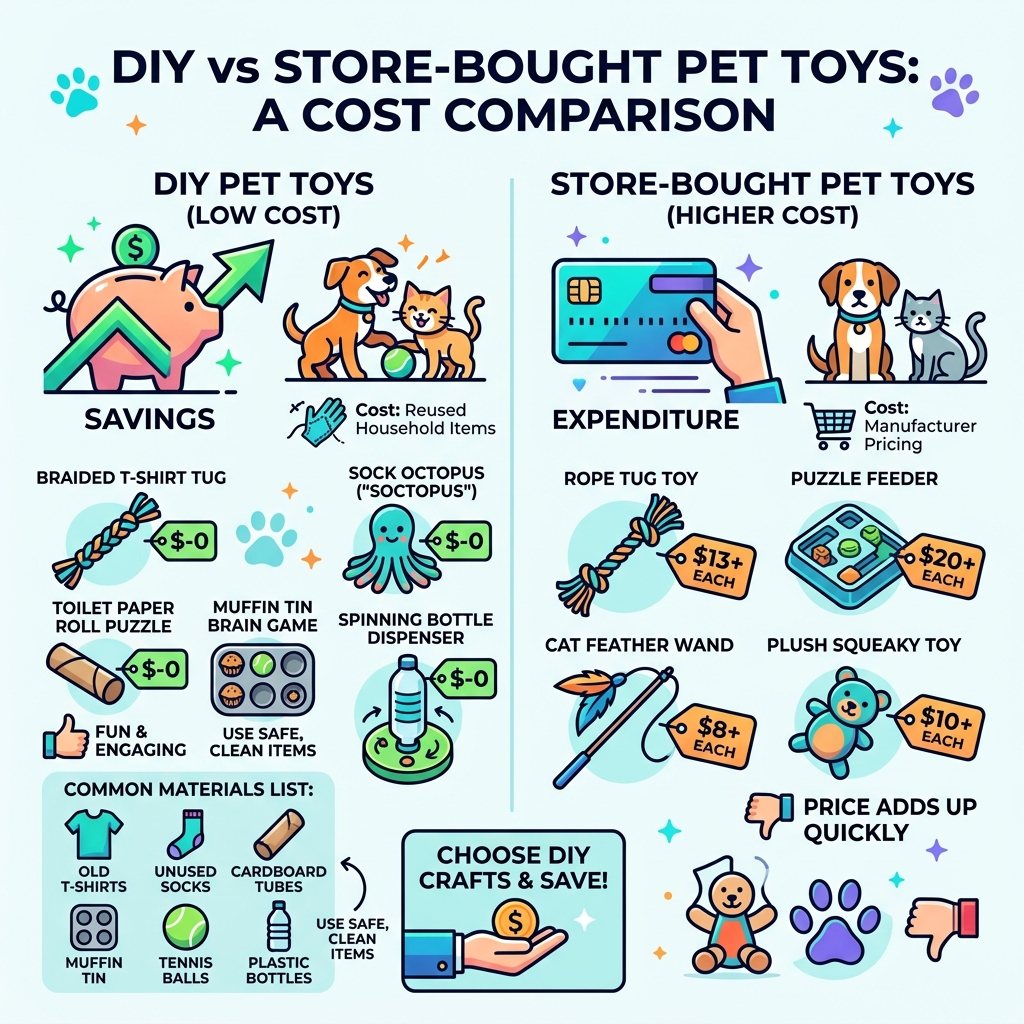
- Braided t-shirt tug toy — cut strips from 2-4 old t-shirts, braid tightly, tie off the ends
- Sock octopus (“soctopus”) — stuff a calf-high sock with smaller socks, tie a knot, cut the bottom into 8 strips
- Toilet paper roll puzzle — fold the ends closed, cut small holes, add treats inside
- Muffin tin brain game — place treats in the cups, cover each with a tennis ball
- Spinning bottle dispenser — poke holes in a plastic bottle, add treats, let your pet bat it around
Store-bought rope toys can run you around $13 a pop. A homemade version made from old t-shirts costs nothing — and often lasts just as long.
The truth is, pets don’t care about price tags. Cats will happily chase a wadded-up piece of paper. Dogs will tug on a braided sock for hours. What matters most is engagement, not expense.
Beyond saving money, DIY toys let you customize for your pet’s size, play style, and preferences — something no mass-produced toy can do.
This guide walks you through 7 simple projects, the safest materials to use, and how to keep toys fresh so your pet never gets bored.
The Benefits of Making Cheap Pet Toy Crafts
We all want the best for our furry companions, but the “best” doesn’t have to come with a premium price tag. Engaging in cheap pet toy crafts offers a wealth of benefits that go far beyond just padding your wallet. For one, these toys are vital for mental health. Many indoor pets lead sedentary lifestyles that can lead to pet obesity, diabetes, and joint problems. By creating interactive puzzles, we encourage movement and help with Pet Exercise Ideas at Home.
Furthermore, DIY toys allow pets to express their natural hunting and foraging instincts. A cat batting at a feather wand or a dog sniffing out kibble in a snuffle mat is performing behaviors that reduce stress and anxiety. This mental stimulation is a key factor in preventing behavioral issues like destructive scratching, furniture chewing, or inappropriate urination.
When we take the time to build something for our pets, we also create unique bonding opportunities. Whether it’s a Sensory Toys for Indoor Pets designed to stimulate their whiskers and ears or a simple cardboard fort, the time spent playing together strengthens the human-animal bond. Plus, since you are the manufacturer, you can ensure that the materials used are safe and tailored specifically to your pet’s size and strength.
7 Step-by-Step DIY Projects for Dogs and Cats
Transforming your home’s recyclables into a pet paradise is easier than you think. You don’t need a workshop or advanced sewing skills to master these cheap pet toy crafts. Most of these projects utilize items you were likely going to throw in the bin anyway.
No-Sew T-Shirt Tug: The Ultimate Cheap Pet Toy Craft
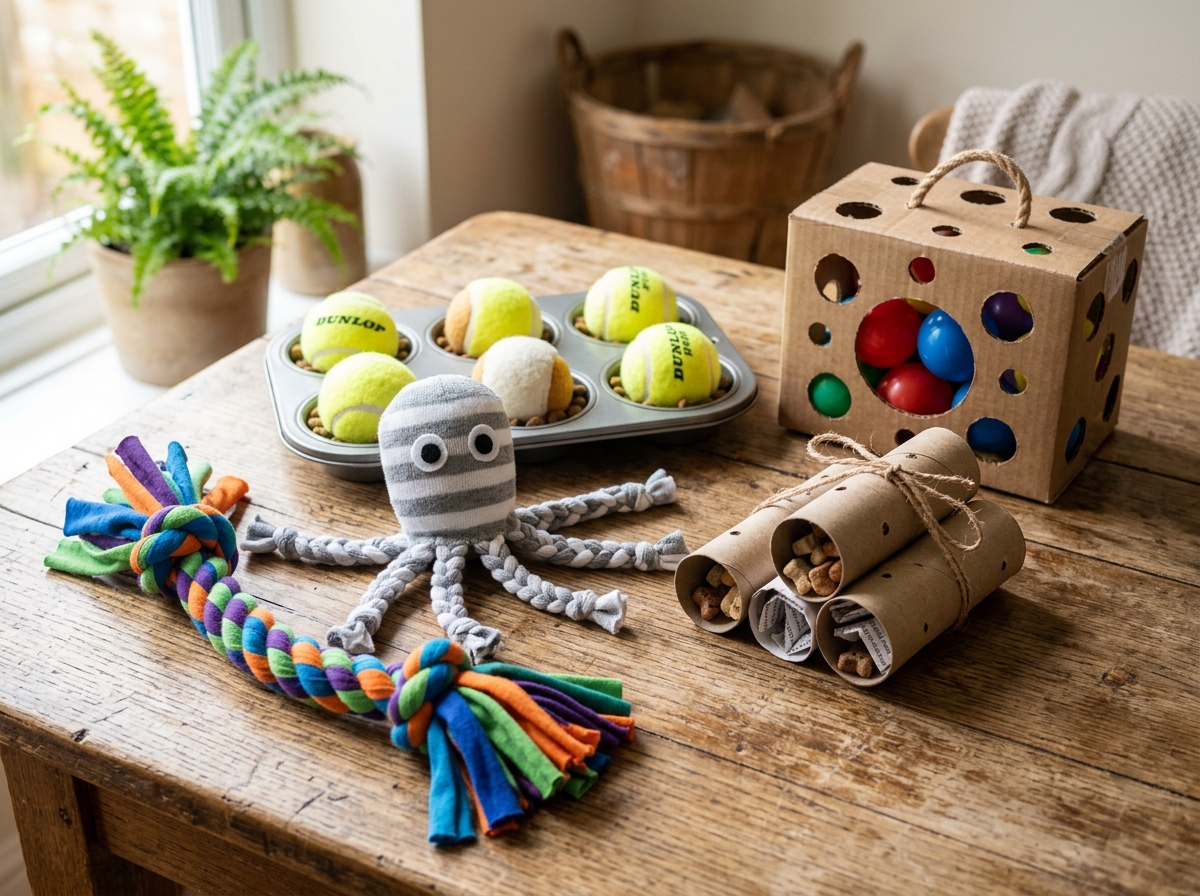
This is a favorite because it upcycles old, ratty t-shirts that are too worn to donate. T-shirt fabric is excellent for toys because it naturally rolls and stretches when torn, creating a durable “fabric yarn” that won’t fray easily.
- Prepare the Fabric: Take 2-4 old t-shirts. Cut off the hems and sleeves. Cut the torso into strips about 2-3 inches wide.
- The Initial Knot: Gather your strips (use about 16 for a small dog or 32 for a large dog) and tie them together in a very tight overhand knot at one end.
- Braid Tightly: Divide the strips into three sections. Braid them as tightly as possible. If you want a more advanced version, you can use a “box knot” or square knot technique to make the toy even sturdier.
- Finish and Trim: Tie another tight knot at the other end. Trim the excess fabric to create a “fringe” that your dog will love to grab.
For more detailed variations, check out our guide on DIY Rope Toys from Old Clothes. These are much more durable than cheap store-bought ropes that pull apart into dangerous strings.
The “Soctopus” Sock Toy
If you have a drawer full of mismatched socks, this is the project for you. It’s a zero-cost toy that provides a satisfying weight for fetch and “dangly legs” for shaking.
- The Head: Take one long calf-high sock. Stuff the toe with 2-4 smaller balled-up socks to create a round, firm head.
- The Knot: Tie a tight knot directly below the “head” to keep the stuffing in place.
- The Legs: Use scissors to cut the remaining tail of the sock into 8 vertical strips.
- The Detail: Tie 1-2 small knots in each “leg” to give the toy more texture and character.
Toilet Paper Roll Food Puzzle
Cats and small dogs are natural foragers. A simple toilet paper roll can become an Interactive Cat Toys: A DIY Approach that keeps them busy for twenty minutes.
- Fold the ends of a cardboard tube inward to close them.
- Use scissors to cut a few small holes (just slightly larger than a piece of kibble) around the tube.
- Drop a few treats or dry food inside.
- Let your pet bat it around the floor to “hunt” for their dinner.
Muffin Tin Brain Game
This is a classic “shell game” for dogs that requires zero assembly. It’s one of the most effective Activity Toys from Household Items for slowing down fast eaters.
- Grab a standard muffin tin.
- Drop a high-value treat into 3 or 4 of the cups.
- Place a tennis ball over every cup in the tin.
- Your dog must use their nose and paws to figure out which balls to move to get the prize.
Spinning Bottle Treat Dispenser
For the “engineer” pets, a spinning bottle toy offers a great challenge. This involves DIY Dog Toys from Plastic Bottles and a bit of a frame.
- The Bottle: Take 2-3 clean plastic bottles (remove caps and labels). Poke two holes on opposite sides of the bottle’s center.
- The Frame: You can use a simple wooden structure or even a sturdy tension rod between two chairs.
- The Assembly: Thread a string or rod through the holes so the bottles hang and can spin freely.
- The Reward: Put treats inside. Your pet will learn to “bat” the bottles so they flip over and drop the food.
Cardboard Enrichment: A Simple Cheap Pet Toy Craft
Never throw away a shipping box without letting your pet play with it first! Cardboard is a versatile medium for Creative Recycling for Pet Toys.
- For Cats: Cut holes in multiple boxes and tape them together to create a “Cat Castle.” Glue squares of old rug or sisal rope to the sides to create DIY scratching surfaces.
- For Dogs: Use a large box as a “destruction box.” Fill it with crumpled paper and hide toys inside. This allows dogs to satisfy their urge to shred in a controlled environment.
Fabric Scrap Plushies
If you have basic sewing skills or even just fabric glue, you can create custom plushies. Using Homemade Toys from Fabric Scraps allows you to make toys that are the perfect size for your pet’s mouth.
- Shapes: Cut two identical shapes (circles or bones) out of durable fabric like denim or fleece.
- Stuffing: Use Safe Stuffing for Plush Pet Toys like old fabric scraps or organic cotton. Avoid polyester filling if your dog is a “shredder.”
- Catnip: For felines, add a spoonful of dried catnip inside before sealing.
- Assembly: Sew or glue the edges. Check out our Simple Steps to Make Plush Toys for Pets for a full breakdown.
Safety First: Choosing Materials for Your DIY Projects
When crafting cheap pet toy crafts, safety is the number one priority. Just because an item is in your house doesn’t mean it’s pet-safe.
| Material | Safety Status | Why? |
|---|---|---|
| Fleece / Cotton T-shirts | Safe | Doesn’t fray into long, dangerous strings. |
| Cardboard | Safe | Digestible in tiny amounts, though mostly just shredded. |
| Plastic Bottles | Supervised Only | Can have sharp edges if chewed; remove caps/rings. |
| Buttons / Plastic Eyes | Unsafe | Major choking hazard; always embroider features. |
| Rubber Bands / String | Unsafe | Can cause intestinal blockage if swallowed. |
| Scented Laundry Sheets | Unsafe | Chemicals can be toxic if licked or chewed. |
Always avoid small parts that can be swallowed. If you are making plush toys, ensure you are using Safe Stuffing for Plush Pet Toys. We recommend using fabric scraps rather than poly-fill, as polyester can take up to 200 years to decompose and is harmful if ingested.
Maximizing Fun: Supervision, Maintenance, and Rotation
Even the best-made toy won’t stay exciting forever. To keep your pet engaged, you need a strategy.
The Power of Rotation
Pets can experience “toy fatigue.” If a toy is always available, it becomes part of the furniture. We suggest keeping only 3-4 toys out at a time. Every week, swap them for “new” ones from your DIY stash.
Pro Tip: Store your cat’s fabric toys in an airtight container with a handful of dried catnip. When you pull the toy out a week later, it will smell fresh and exciting all over again!
Maintenance and Cleaning
Since these are cheap pet toy crafts, they are easy to replace, but you can make them last longer with proper care.
- Washing: Most t-shirt and sock toys can be tossed in the washing machine on a cold, gentle cycle.
- Inspection: Check toys daily for loose threads or sharp plastic edges. If a cardboard box is getting soggy or a t-shirt braid is coming undone, it’s time to recycle it and make a new one.
- Supervision: Always supervise your pet when they are playing with a “new” DIY creation. This allows you to see if they have a specific chewing style that might make the toy unsafe (e.g., if they try to eat the plastic bottle rather than spinning it).
Frequently Asked Questions about DIY Pet Toys
Can these crafts be adapted for different pet sizes?
Absolutely! For a small dog or cat, use thinner strips of fabric and smaller socks. For a large breed like a Great Dane, you’ll want to double or triple the number of t-shirt strips to create a thick, heavy-duty rope. For food puzzles, ensure the holes are large enough for the specific kibble size you use.
How do I know if a household item is safe for my pet?
A good rule of thumb is: if you wouldn’t give it to a toddler, don’t give it to your pet. Avoid anything with sharp edges, toxic chemicals (like cleaning jugs), or small parts that can be pried off. If you’re unsure, stick to natural fibers like 100% cotton.
What are the best ways to clean homemade fabric toys?
Most fabric-based DIY toys can be machine-washed. Use a pet-safe, unscented detergent to avoid irritating their sensitive noses. Air drying is usually best to maintain the integrity of the knots or glue.
Conclusion
At Vanguarda Tec, we believe that providing high-quality enrichment shouldn’t break the bank. By embracing cheap pet toy crafts, you are choosing a sustainable, creative, and personalized way to care for your best friend. From upcycling old t-shirts into durable tugs to turning trash into treasure with cardboard castles, the possibilities are endless.
Ready to start your next project? Explore our full library of guides at https://www.vanguardatec.com/ for more inspiration on keeping your pets happy, healthy, and active without the high price tag. Happy crafting!
