
Why Every Kitten Owner Should Try Making Toys at Home
Homemade cat toys for kittens are one of the easiest ways to keep your kitten happy, active, and mentally sharp — without spending much money at all.
Here are some quick ideas you can make today:
- Toilet paper roll puzzle — fold the ends, poke holes, add treats inside
- Feather wand — tie feathers to a stick with string
- No-sew fleece ball — cut, fringe, roll, and tie a strip of old fleece
- Baby sock crinkle toy — stuff an old sock with crumpled paper and tie it shut
- Cardboard box maze — cut holes in boxes and stack them together
These take 5–15 minutes to make and use things you likely already have at home.
Kittens are bundles of energy. They pounce, chase, bat, and chew — often destroying store-bought toys within days. The good news? Simple household materials like cardboard, old fabric, and paper can keep them just as entertained, and sometimes more so.
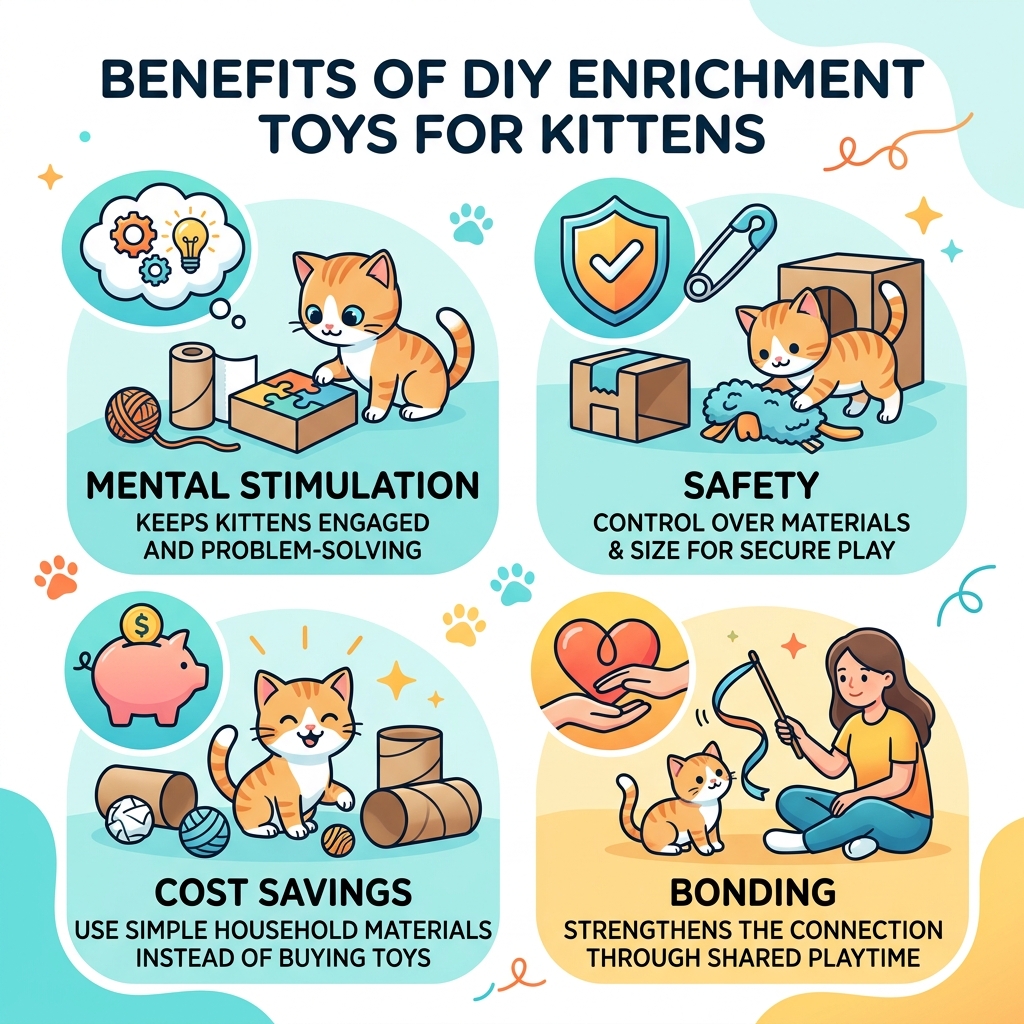
Beyond saving money, making your own toys gives you full control over what your kitten plays with. You choose the materials. You set the size. You know exactly what went into it.
Enrichment also matters more than most people realize. Cats are natural hunters, and without outlets for that instinct, kittens can become bored, anxious, or destructive. A homemade toy that mimics prey — something that crinkles, dangles, or rolls — taps directly into those instincts.
Why Homemade Cat Toys for Kittens are a Game Changer

We have all seen it: you spend $20 on a high-tech robotic mouse, only for your kitten to spend three hours playing with the cardboard box it came in. This isn’t just a quirk; it’s because simple materials often better mimic the unpredictable movement of prey in the wild.
When we create homemade cat toys for kittens, we are tapping into their innate hunting instincts. Kittens need to stalk, pounce, and “kill” their toys to feel satisfied. This type of play provides vital physical exercise that prevents obesity and joint issues later in life. Furthermore, Indoor Cat Enrichment Ideas are essential for preventing behavioral problems like overgrooming or urinating outside the litter box, which often stem from stress or boredom.
By providing varied textures and puzzles, we offer the mental stimulation required to keep a growing brain sharp. This prevents destructive behavior—like shredded curtains or attacked ankles—by redirecting that boundless energy toward a productive “job.”
| Feature | Store-Bought Toys | DIY Homemade Toys |
|---|---|---|
| Cost | $5 – $50+ | $0 (Recycled materials) |
| Durability | Varies; often easily shredded | Easily replaced or repaired |
| Safety Control | Unknown materials/glues | 100% owner-verified materials |
| Customization | None | Tailored to your kitten’s size/preference |
| Engagement | Static designs | Can be refreshed with catnip or treats |
Essential Safety Tips for DIY Kitten Toys
While making toys is fun, safety is our top priority. Kittens are like toddlers; they explore the world with their mouths and can be quite rough on their playthings.
First and foremost, always supervise your kitten with a new toy. Even the sturdiest-looking project can be torn apart by a determined Bengal or a teething Tabby. When assembling toys, we recommend using Pet Safe Glue and Fabric Choices to ensure that even if they take a nibble, they aren’t ingesting toxic chemicals.
Materials to Avoid
There are several common household items that are actually dangerous for felines:
- Yarn, String, and Ribbon: These are high-risk. If swallowed, they can cause linear foreign body obstructions in the intestines, which are life-threatening and require emergency surgery.
- Small Parts: Avoid beads, googly eyes, or small bells that can be easily ripped off and swallowed.
- Rubber Bands and Hair Ties: These are frequently swallowed by curious kittens.
- Sharp Edges: If you are cutting plastic bottles or metal cans, ensure the edges are sanded down or covered.
For a deeper dive into protecting your pet, check out our guides on Avoiding Choking Hazards in DIY Cat Toys, as well as Avoiding Choking Hazards in DIY Cat Toys 2 and Avoiding Choking Hazards in DIY Cat Toys 3.
Top 5 Homemade Cat Toys for Kittens You Can Make Today
You don’t need to be a master crafter to make something your kitten will love. Most of these projects take less than 10 minutes.
- The Toilet Paper Roll Treat Puzzle: This is perhaps the easiest toy on the list. Take an empty roll, fold the ends inward to close them, and poke a few kibble-sized holes in the sides. Fill it with a few treats and watch your kitten bat it around to “hunt” for their snack.
- Cardboard Foraging Box: Using Cardboard to Make Cat Playthings is a sustainable way to play. Simply glue several toilet paper rolls upright inside a small shoe box. Drop treats or small toys into the tubes, forcing your kitten to use their paws to “fish” them out.
- The Ultimate Feather Wand: Kittens love things that fly. Tie a few feathers to a sturdy string, then tie that string to a wooden dowel or a stick from the yard. For safety, never leave a wand toy out when you aren’t there to hold it, as the string is a hazard. Follow our Feather Toys for Cats Easy DIY Steps for a more durable version.
- Fleece Fringe Balls: Fleece is a fantastic material because it doesn’t fray. Cut a strip of fleece about 8 inches long, fringe the edges with scissors, roll it up tightly, and tie it in the middle with another strip of fleece. This creates a soft, bouncy pom-pom that is great for fetching.
- Wine Cork Kickers: If you have natural wine corks (not plastic), they make excellent lightweight toys. You can even soak them in a jar with dried catnip to infuse them with an irresistible scent.
For those just starting out, we have more Beginner Friendly Pet Toy DIY tips and Beginner Friendly Pet Toy DIY 2 ideas to get your creative juices flowing.
Simple No-Sew Homemade Cat Toys for Kittens
If you don’t have a sewing machine, don’t worry! Many of the best homemade cat toys for kittens require zero stitching.
- T-Shirt Knots: Take an old, clean cotton T-shirt and cut it into long strands. Knot five or six strands together at one end, braid them tightly, and knot the other end. These are great for “tug” play or carrying around. You can find more ideas on Making Cat Toys from Household Items.
- Upcycled Sock Mice: Take an old baby sock or a mismatched adult sock. Fill it 2/3 full with crumpled paper or cardstock to create a “crinkle” sound that mimics the rustling of small prey. Tie the end shut with a sturdy knot. These Upcycled Sock Mice for Cats are an instant hit.
- The Crinkle Ball: Simply ball up a piece of parchment paper or clean packing paper. The sound alone will send most kittens into a frenzy.
- Knotty Yarn Toys: While we must be careful with loose yarn, a very tightly knotted and trimmed yarn pom-pom (where the strands are short and cannot be pulled loose) can be safe under supervision. Learn more about How to Make Cat Toys out of Household Items and Yarn and Upcycling Socks into Cat Toys.
Interactive Homemade Cat Toys for Kittens and Enrichment
Enrichment is about more than just movement; it’s about using the brain. Interactive Cat Toys a DIY Approach focuses on puzzle-solving.
- Reach Feeders: Cut holes in the lid of a Tupperware-style container that are just large enough for a kitten’s paw. Place toys or noisy bells inside. The kitten has to figure out how to move the toys around through the holes.
- Slow Feeders: For kittens that eat too fast, use a clean egg carton. Distribute their kibble into the different cups. This forces them to “hunt” for each bite, slowing down their digestion and providing a mental challenge.
- Cardboard Mazes: Use several boxes of different sizes. Cut “doorways” between them and tape them together to create a tunnel system. This encourages Cat Climbing and Playing Ideas and provides a safe place to hide.
- Hide and Seek: Try our DIY Hide and Seek Toys for Cats to keep them guessing. You can also look at Cat Climbing and Playing Ideas 2 for vertical play suggestions.
Using Catnip Safely in Your DIY Projects
Catnip is the “secret sauce” of the cat world. It contains a compound called nepetalactone, which triggers a euphoric response in many felines.
However, there are a few things to keep in mind:
- Genetic Sensitivity: About 50-75% of cats have a genetic sensitivity to catnip. If your kitten doesn’t react, they might just be in the other 25-50%.
- Age Matters: Most kittens do not respond to catnip until they are between 3 and 6 months old. If your 8-week-old kitten is indifferent, try again in a few months!
- Duration: The “high” usually lasts about 10 to 15 minutes. After that, the cat becomes temporarily immune to the effects for about 30 minutes to an hour.
When making catnip toys, use high-quality organic dried catnip. You can mix it with Safe Stuffing for Plush Pet Toys or fabric scraps. We have detailed guides on Safe Stuffing for Plush Pet Toys 2 and Simple Steps to Make Plush Toys for Pets to help you create professional-quality toys at home. For even more detail, see Simple Steps to Make Plush Toys for Pets 2.
Frequently Asked Questions about Homemade Cat Toys for Kittens
How often should I rotate homemade cat toys for kittens?
Kittens are highly intelligent and can lose interest in a toy if it’s always available. We recommend a weekly rotation. Keep only 3 or 4 toys out at a time and store the rest in a closed bin (ideally with some dried catnip to “recharge” the scent). When you bring out a “new” toy the following week, your kitten will treat it like a brand-new discovery! You can also try Creating Fun Ball Toys for Cats to keep the variety high.
Can I donate these DIY toys to animal shelters?
Yes! Many shelters are in desperate need of enrichment items. However, shelters have strict safety rules. Ensure all seams are double-stitched and no small parts can be chewed off. Avoid using catnip in donated toys unless the shelter specifically allows it, as some cats may have adverse reactions or medical conditions. Check our Safe Sewing Tips for Pet Toys and Safe Sewing Tips for Pet Toys 2 to make sure your donations are top-tier.
What household materials are safest for teething kittens?
Teething kittens need to chew to relieve gum discomfort. Cardboard is a great, safe option because it’s soft enough not to damage teeth but satisfying to crunch. Fleece is also excellent because it is soft and doesn’t have long fibers that can get stuck in teeth. Always ensure you are using Non Toxic Materials for Pet DIY Toys. You might even find inspiration in Choosing Materials for Puppy Toys and Choosing Materials for Puppy Toys 2, as many of the safety principles for young animals overlap.
Conclusion
Creating homemade cat toys for kittens is a rewarding way to bond with your new furry friend while saving money and reducing waste. At Vanguarda Tec, we believe that personalized, hand-crafted play is the best way to support your pet’s development. Whether it’s a simple cardboard maze or a carefully stitched catnip mouse, your kitten will appreciate the effort (and the fun!).
Ready to start your next project? Learn How to Make Stuffed Animal Toys for Pets or Explore more DIY toy projects on our main hub. Happy crafting!
